
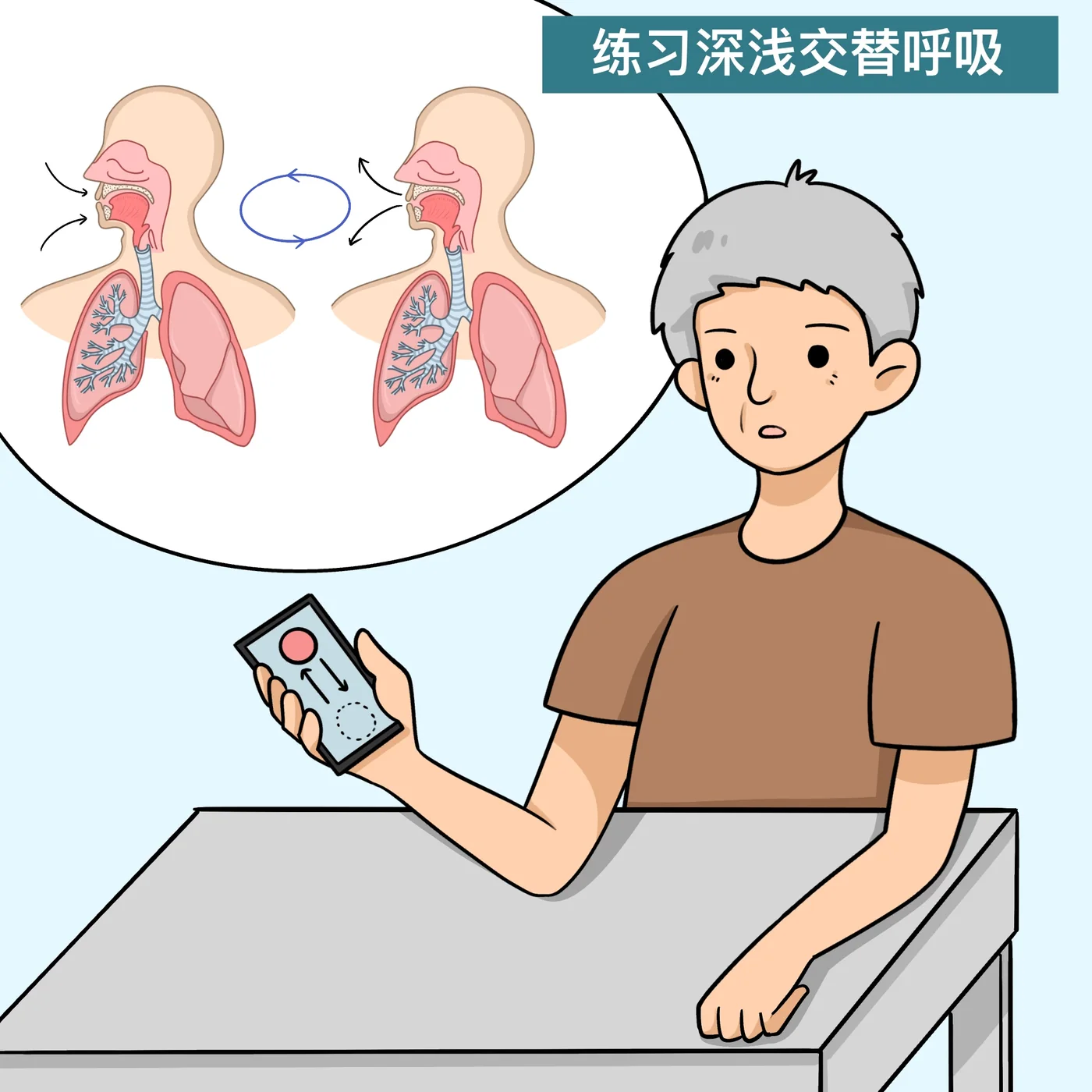
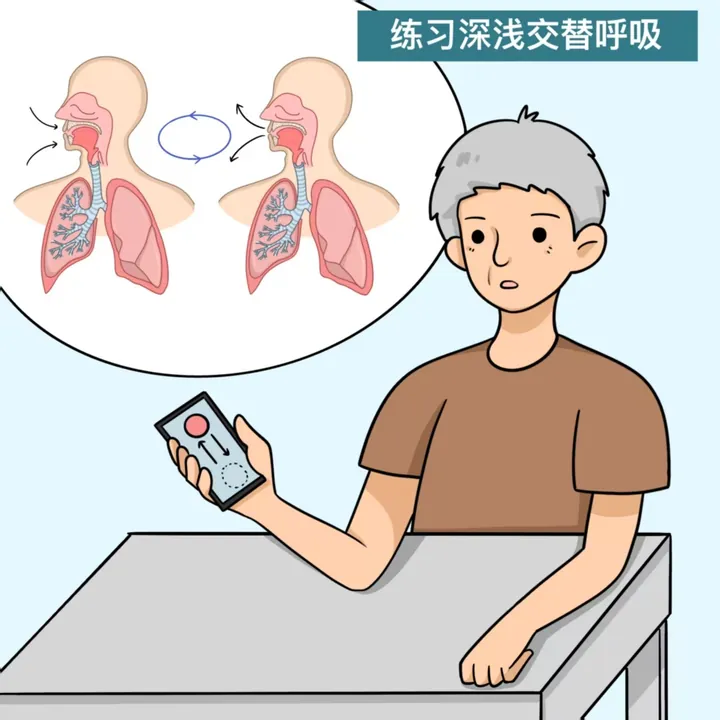
An "anatomical magnifier" shows how the nose and lungs work during alternating deep–shallow breathing: two lung tones mark filling states, circular arrows mark the breath cycle, and a practitioner on the right holds a guide chart — turning abstract training into a followable motion. Related research examines how breathing patterns relate to brain connectivity and mood.
The Story Behind the Image
Paper abstract (original)
Abstract Introduction To explore the impact of different breathing patterns on brain connectivity and emotional states. Methods We recruited 31 participants with an average age of 19 years. They were instructed to perform controlled breathing, including calm, shallow, deep, and alternating deep and shallow breathing patterns. We employed functional near-infrared spectroscopy (fNIRS) to investigate disparities in the effects of multiple breathing patterns on the brain. Meanwhile, we captured the participants’ facial expressions and vital signs. Results There were significant variations in the effects of four breathing patterns on functional connectivity between brain regions, facial expressions, and vital signs. The four breathing patterns impacted six brain regions. Among them, alternating deep and shallow breathing had a particularly pronounced effect, and there was robust functional connectivity in different brain regions. Additionally, this breathing pattern elevated autonomic nervous system activity, which contributed to achieving a more tranquil state. Furthermore, alternating deep and shallow breathing had a more positive influence on the changes in oxyhaemoglobin concentration (Δ [HbO 2 ]) of the brain compared with deep breathing. Discussion Alternating shallow and deep breathing could enhance emotional stability, improve autonomic nervous system function, and promote brain functional connectivity. Our findings unveiled distinct effects of diverse breathing patterns on both the brain and mood state, establishing a theoretical foundation for respiratory rehabilitation training for stroke patients. Keywords: functional connectivity, facial expressions, functional near-infrared spectroscopy (fNIRS), respiratory rehabilitation training, breathing pattern