
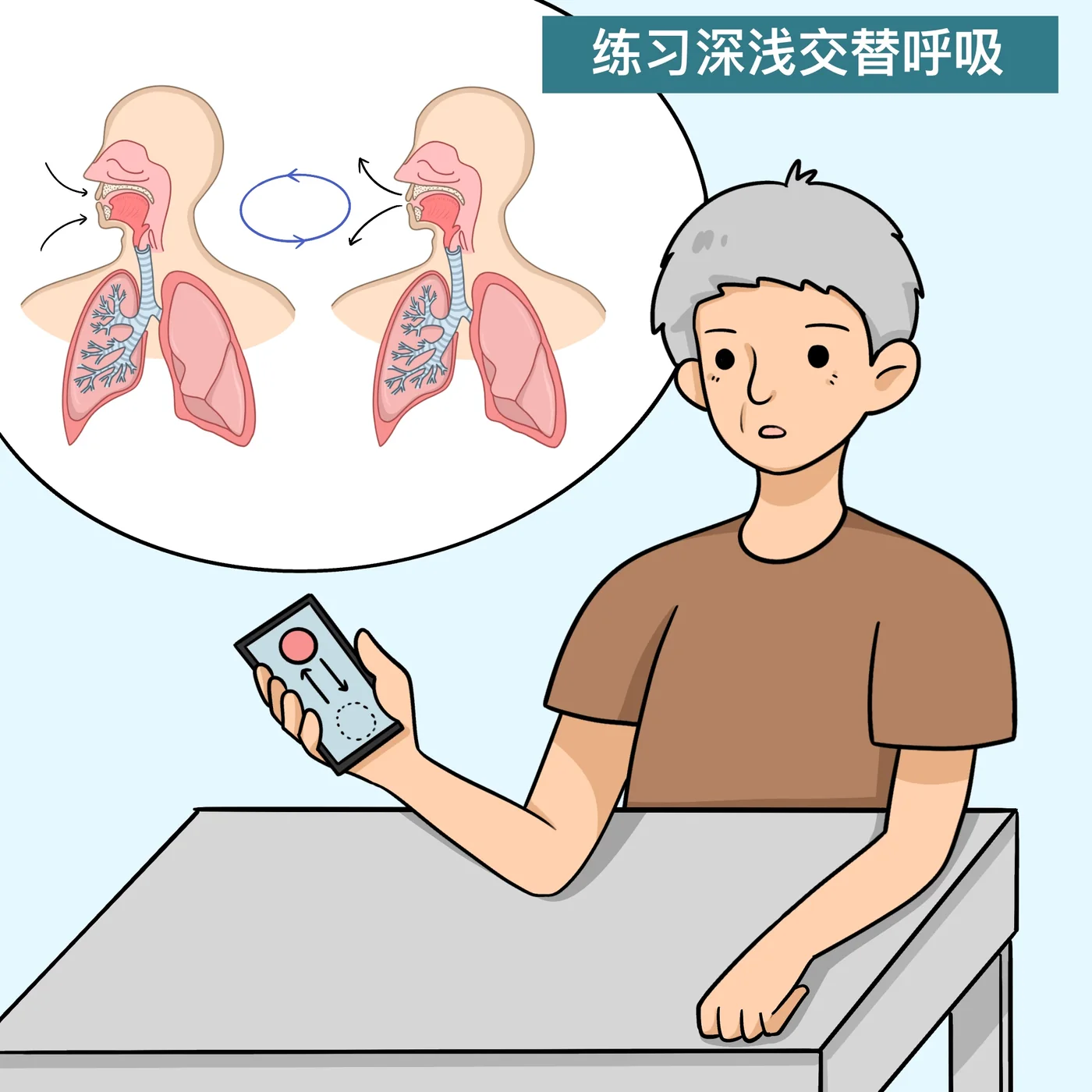
画面用一幅“解剖放大镜”演示深浅交替呼吸时鼻腔与双肺的工作方式:两个肺叶以深浅两色区分充盈状态,循环箭头标出一吸一呼的节律;右侧练习者手持引导图,把抽象的呼吸训练变成可跟随的动作。相关研究探讨交替呼吸模式与脑功能连接及情绪状态的关联。
图背后的故事
引言:探索不同呼吸模式对脑功能连接与情绪状态的影响。方法:研究招募 31 名平均年龄为 19 岁的参与者,指导其进行平静、浅、深以及深浅交替的控制呼吸;采用功能近红外光谱(fNIRS)考察多种呼吸模式对大脑影响的差异,同时采集面部表情与生命体征。结果:四种呼吸模式对脑区间功能连接、面部表情及生命体征的影响存在显著差异,共影响六个脑区。其中,深浅交替呼吸的效应尤其明显,多个脑区之间表现出较强的功能连接。此外,这种呼吸模式提高了自主神经系统活动,有助于获得更平静的状态;与深呼吸相比,深浅交替呼吸对脑内氧合血红蛋白浓度变化的影响更为积极。讨论:深浅交替呼吸可能增强情绪稳定性、改善自主神经系统功能并促进脑功能连接。研究揭示了不同呼吸模式对大脑与情绪状态的不同影响,为卒中患者呼吸康复训练提供理论基础。
论文摘要(中文译文 · 原文)
中文译文 摘要 引言 探讨不同呼吸模式对脑功能连接与情绪状态的影响。方法 招募31名平均年龄19岁的受试者,按要求完成控制呼吸,包括平静呼吸、浅呼吸、深呼吸与深浅交替呼吸四种模式;采用功能近红外光谱(fNIRS)考察多种呼吸模式对脑影响的差异,同时记录受试者的面部表情与生命体征。结果 四种呼吸模式对脑区间功能连接、面部表情及生命体征的影响均存在显著差异,共影响六个脑区;其中深浅交替呼吸的作用尤为突出,不同脑区间存在稳健的功能连接,该模式还提升自主神经活动,有助于进入更平静的状态;与深呼吸相比,深浅交替呼吸对脑氧合血红蛋白浓度变化(Δ[HbO₂])的影响更为积极。讨论 深浅交替呼吸可增强情绪稳定性、改善自主神经系统功能、促进脑功能连接。本研究揭示了不同呼吸模式对脑与情绪状态的差异化影响,为脑卒中患者的呼吸康复训练奠定了理论基础。关键词:功能连接;面部表情;功能近红外光谱(fNIRS);呼吸康复训练;呼吸模式
Abstract Introduction To explore the impact of different breathing patterns on brain connectivity and emotional states. Methods We recruited 31 participants with an average age of 19 years. They were instructed to perform controlled breathing, including calm, shallow, deep, and alternating deep and shallow breathing patterns. We employed functional near-infrared spectroscopy (fNIRS) to investigate disparities in the effects of multiple breathing patterns on the brain. Meanwhile, we captured the participants’ facial expressions and vital signs. Results There were significant variations in the effects of four breathing patterns on functional connectivity between brain regions, facial expressions, and vital signs. The four breathing patterns impacted six brain regions. Among them, alternating deep and shallow breathing had a particularly pronounced effect, and there was robust functional connectivity in different brain regions. Additionally, this breathing pattern elevated autonomic nervous system activity, which contributed to achieving a more tranquil state. Furthermore, alternating deep and shallow breathing had a more positive influence on the changes in oxyhaemoglobin concentration (Δ [HbO 2 ]) of the brain compared with deep breathing. Discussion Alternating shallow and deep breathing could enhance emotional stability, improve autonomic nervous system function, and promote brain functional connectivity. Our findings unveiled distinct effects of diverse breathing patterns on both the brain and mood state, establishing a theoretical foundation for respiratory rehabilitation training for stroke patients. Keywords: functional connectivity, facial expressions, functional near-infrared spectroscopy (fNIRS), respiratory rehabilitation training, breathing pattern